

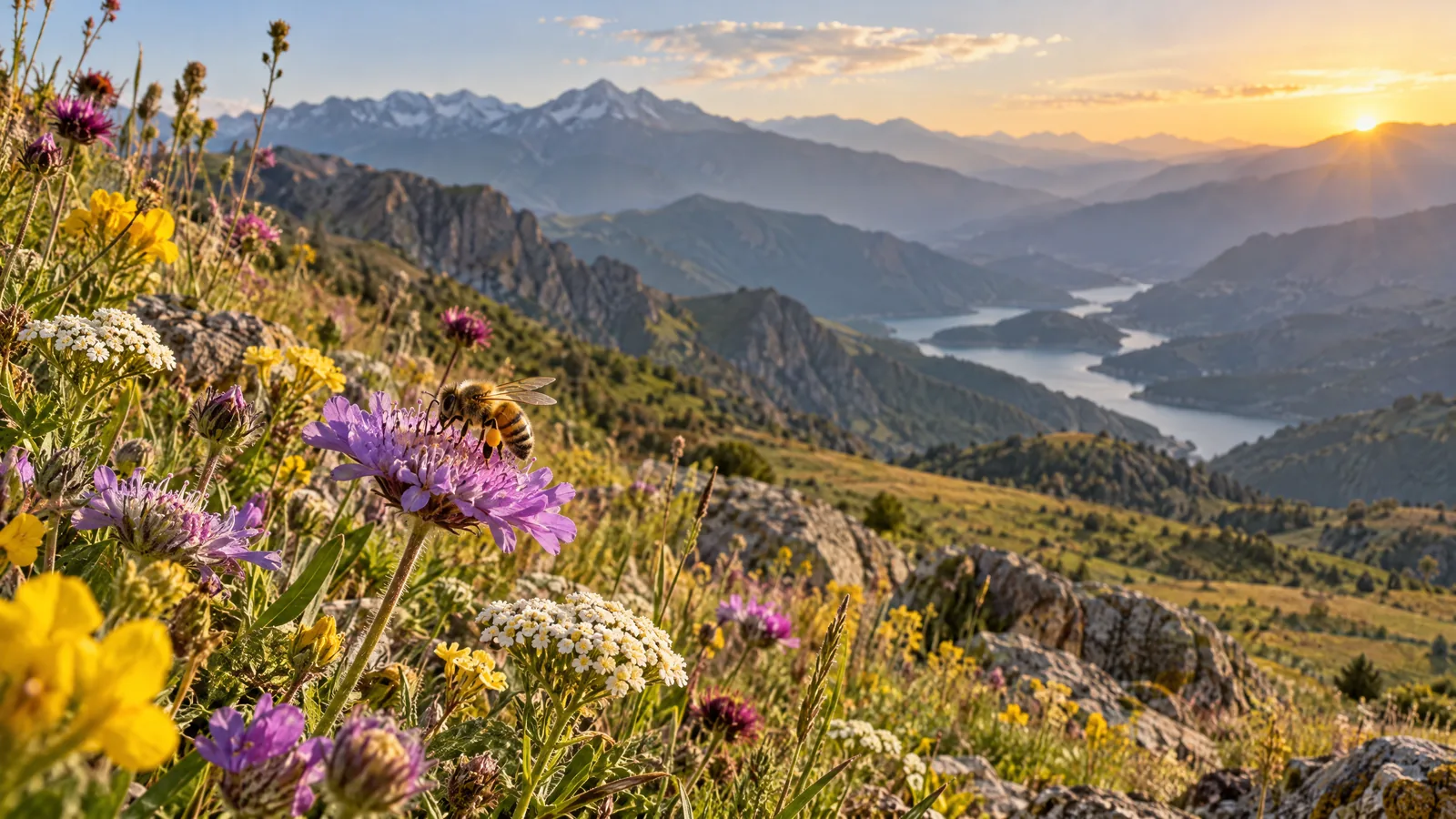
To understand the story of a honey, you need to look at the flowers before the jar. This is our starting point when telling about Hizan: the plant blooming on the slope, the bee that visits it, and the beekeeper who watches the season. Astragalus and thyme are particularly mentioned in beekeeping news in the region.
Astragalus and thyme: These names may not cover a single plant species, but different species. The color or colloquial name of the flower is not enough to determine its scientific type. On-site observation and correct diagnosis are important when associating a plant with a specific plateau of Hizan.
Clover and wild mint: These are the other two topics we focus on in this flower guide. When identifying these, it is necessary to examine the leaves, flowers and growing environment together. Just based on a similar photograph, it cannot be said that honey contains the nectar of these plants.
Sığırdili and yakı otu: when identifying the plants known locally by these names, consider their leaves, flowers and habitat together. Local names may vary; a plant’s presence in the region does not mean it contributes equally to every honey harvest. Flowering records, apiary location and, where needed, pollen analysis should be considered together.
When describing the flowers of Hizan, we do not attribute a definite taste, health effect or endemicity to each of them. These six names are a start to getting to know nature more closely. The botanical source of the product should be explained with information about the relevant harvest.